Work Orders
Overview
The Work Order is used to calculate the price of a custom picture frame. Its point-of-sale design has easy to use drop-down menus, check boxes, and buttons. Moulding, mat design, hardware, etc. can all be selected from drop-down menus.
The Work Orders file is where you create, price and track all Work Orders; print Estimates and Proposals; monitor production flow and convert framed artwork for gallery display.
Invoices may be created directly from the Work Orders file for framing purchases.
Work Order Status
The status of any given Work Order can only be one of the following:
Incomplete (default)
By default, all new Work Orders are set to Incomplete.
Incomplete means that the Work Order has been entered on the computer but has not yet been assembled.
Incomplete Work Orders are automatically included when you generate a Purchase or Frame Order.
If you are creating scratch Work Orders to test out pricing, then when done either delete them or mark them as Estimate. This prevents them from being included in your ordering stream.
An Incomplete schedule can be printed.
On the Main Menu, a badge showing the record count of incomplete Work Orders is associated with the Find Incomplete Work Orders button.
Hold
Use only if you know you have the sale but are not ready to order the supplies, e.g. customer wants spouse to see it, or to confirm that the mat matches the furniture.
Complete
The order is assembled and no further work is required on the piece.
You must manually mark this button.
Complete Work Orders are included in Sales Reports.
Estimate Button
Use to omit the materials from the ordering stream (Frame Orders and Purchase Orders) as well as usage reports.
Also, use this status when creating Work Order Templates.
Tip: At the end of each month, find all Work Orders marked as Estimate and then contact the customer and encourage them to commit to the sale.
Work Order Components and Flow
The Work Order form view screen is divided into six sections:
Measurements
Framing Materials/ components
Artwork
Customer Information
Shop Management
Pricing
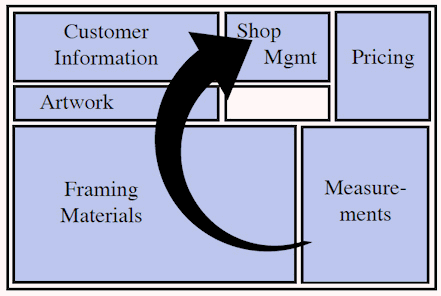
When creating a Work Order, we recommended that data be entered in the order shown above.
Meet the customers needs first by entering the framing measurements, materials and the artwork information.
That information can then be used to calculate the price (which appears in the upper right corner of the screen.)
The last item to enter is the customer information, which is required for your records.
Of course, the individual entering the data has the flexibility to move around the screen in any way, e.g. If purchasing art from stock, enter artwork first; If ordering art, enter customer information first, etc.
Do not
post a Work Order to an Invoice until you are ready to receive payment.
See also:
How
to Enter a Deposit (accrual accounting method), How
to Enter a Deposit Without Creating a Taxable Invoice (cash accounting
method)
Work Orders Screens Explained
Tip: Underlined buttons take you to screens with more choices and details.
Form View
List View
Sidebar Buttons
Detail Screens
Tip: In FrameReady, underlined buttons take you to screens with more choices and details.
How Items Are Numbered in FrameReady
Tracking Work Orders
Video Tutorials Series
Discounting Frame Jobs, Shop Management Work Order
Work Order Screen Overview, Understanding the Work Order File
Work Order Measurements, Materials
Entering Artwork Information, Customer Information Entry
Pricing Section, Reports Related to Work Order Reports
Getting Started with Work Orders
Work Orders Setup
How-to Articles
How to add: a Customer to a Work Order, Print Services to a Work Order
How to create: a Frame Order, a Tax Exempt Work Order, a Package Special, a Work Order Template
How to enter: a Discount on a Work Order, Fillets, Float Mounts, Floater Frame and Floater Space, Hand-Wrapped Mat
How to fit to: Outside Dimensions, Readymade Frame
How to price: a Multi-Sided Frame, Other Items
How to print: Single Work Order, Work Orders, Reprint a Work Order, Work Order Estimate (Blind)
More Features Explained
Progress Field Explained: Tracking your Work Order completion status
Priority Field Explained: Tracking your Work Order by importance
Printable from Work Orders
The following documents and reports can be printed from the Work Order file: